Nov 19, 2025
𝄪
Research
𝄪
5 min
Chasing Promises Over Profits: What SoftBank's Nvidia Exit Really Means
Why the market punished Softbank's decision
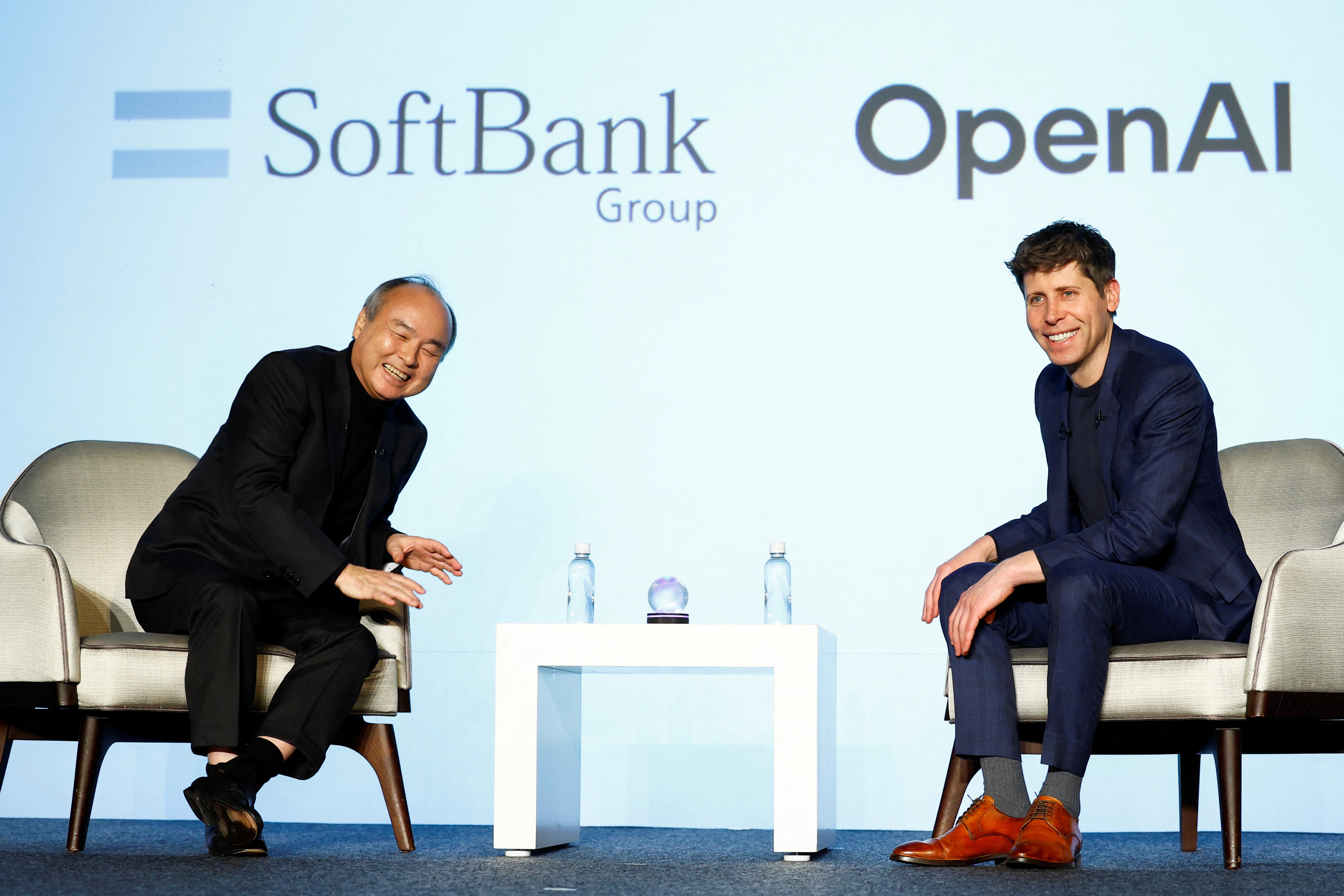
SoftBank's decision to sell its entire Nvidia stake, reportedly worth $5.83 billion, to help finance a $22.5 billion investment in OpenAI has sent ripples through the investment community. According to CNBC, chief financial officer Yoshimitsu Goto positioned the move as a way to maintain financial strength while pursuing fresh opportunities. On the surface, it's a straightforward reallocation. But scratch beneath, and this transaction reveals a market dynamic that I find deeply concerning.
The facts are clear: Nvidia is a dominant force with a proven business model, defensible moat, and robust revenue streams. OpenAI, by contrast, represents the bleeding edge of generative AI. High potential, yes, but also high uncertainty. Monetisation remains elusive, spending is astronomical, and execution risk is substantial. Recent reporting from The Wall Street Journal reveals that OpenAI expects to burn through approximately 14 times as much cash as rival Anthropic before reaching profitability in 2030, while Anthropic is on track to break even by 2028. What's more, AI model quality improvements appear to be stagnating, and businesses aren't yet seeing meaningful returns on their AI investments. These realities compound the risk profile considerably.
I don't question SoftBank's logic in comparing expected returns. If they believe OpenAI's upside eclipses Nvidia's, selling makes sense within their framework. What troubles me is what this move represents. SoftBank, admittedly known for risk-taking that exceeds most institutional players, has made a bold statement: it's willing to rotate billions from stable, cash-generating blue chips into speculative ventures whose commercial viability remains unproven. And they're not alone. Peter Thiel's hedge fund also fully exited its Nvidia position in the third quarter, offloading shares worth nearly $94 million. While not every major player is making this shift, when prominent investors like SoftBank and Thiel liquidate their positions, it serves as a telling indicator of where market appetites are heading. And it's a direction that warrants scrutiny.
Meanwhile, the market's response to these moves speaks volumes. SoftBank shares plunged as much as 10% following the disclosure, extending into a three-day selloff that wiped billions off its market capitalisation. It seems that investors are rejecting the premise that rotating from proven performers into even riskier AI speculation is a sound strategy right now. The market has entered a show me the returns phase for AI investments. The days of rewarding bold AI bets on faith alone appear to be ending, replaced by demands for tangible proof of concept and clear paths to profitability. When a major institutional player shifts capital from a cash-generating blue chip into a venture that won't break even for years, if at all, the market now punishes rather than applauds.
This caution is particularly pronounced given how AI investments are increasingly being financed. Major tech companies are turning to debt markets to fund their AI infrastructure buildouts, with Meta recently arranging a $29 billion hybrid financing package. BCA Research has warned that the AI trade could unravel as free cash flows at these companies dwindle. The combination of rising debt loads, shrinking cash piles, and unproven returns is making investors increasingly wary, not just of speculative new ventures but of the entire AI spending cycle. SoftBank's stock collapse suggests the market is growing sceptical of AI investments financed through liquidating proven assets, especially when those investments carry significantly higher execution risk.
The real risk emerges when this capital rotation mindset spreads beyond sophisticated institutional investors into public markets. Right now, these speculative AI bets are contained in private markets, accessible only to players like SoftBank. But once companies like OpenAI and other unproven AI ventures go public, the floodgates open. These newly public AI companies, carrying sky high valuations alongside minimal revenue and uncertain business models, would mirror the cash-burning dot-com darlings of the late 1990s. Retail investors and less sophisticated institutional players, far more susceptible to FOMO, would gain access to these same high risk opportunities. The speculative fever that drove investors to pile into unprofitable internet companies could repeat itself with AI.
But there's another dimension to this risk that concerns me even more: the impact on established players and market indices. If this rotation accelerates, with major investors continuing to liquidate positions in heavyweight stocks like Nvidia, it creates downward pressure on the very companies that anchor major indices. The Magnificent 7 stocks represent an outsized portion of the S&P 500's market capitalisation. Sustained outflows from these blue chips, even if driven by portfolio rebalancing rather than fundamental concerns, could trigger broader market selloffs simply due to their index weight. When the foundation weakens, everything built on top becomes unstable. And if this capital flows into speculative AI ventures that ultimately fail to deliver, we'd face a double whammy: falling blue chips dragging down indices while newly public AI companies implode. Many retail investors would watch their portfolios sink to levels last seen pre-AI, that is, assuming overleveraging didn't wipe them out entirely.
TLG Research
FOOTNOTE
Sources: FT, CNBC, TLG Independent Research