Oct 10, 2025
𝄪
Research
𝄪
4 min
Everyone Sees the Fire, But No One Grabs a Hose
As bubble talk grows louder and risk warnings are everywhere, markets keep rising.
As bubble talk grows louder and risk warnings are everywhere, markets keep rising. Though, is a bubble really going to burst if awareness is high, but nobody is stepping away from the fire?
An opinion piece titled “Brace for market melt-up” by Katie Martin in the Financial Times recently described a market that just keeps climbing, with investors piling into stocks and riskier assets even as the list of obvious dangers grows longer. The article points out that everyone, from fund managers to retail traders, seems to agree that things look frothy, maybe even bubbly, but the party goes on. So how different is the current mood from past bubbles, and what does that mean for what comes next?
What’s new this time is the tone in the mainstream media. Back during the dot-com bubble or even the pre-GFC years, not many wanted to utter the word “bubble” this early on. Optimism was both widespread and contagious, denial was the default, and most people convinced themselves this time was different. As Goldman Sachs puts it:
“From October 1998 onwards, markets cheered the seemingly endless IPOs of dot-com firms without paying much attention to the viability of their business models. […] Encouraged by financial analysts, retail and institutional investors avidly purchased over-the-counter equities in anticipation that they would sell them for even higher prices.”
Today seems different: bubble warnings are everywhere in the mainstream media, and yet, instead of pulling back, people keep buying. It’s as if we’re all standing around a house, watching smoke pour out of the windows. We keep warning each other, “Look out, something’s about to catch!” but rather than dousing the flames or clearing out, we just throw on more petrol for good measure.
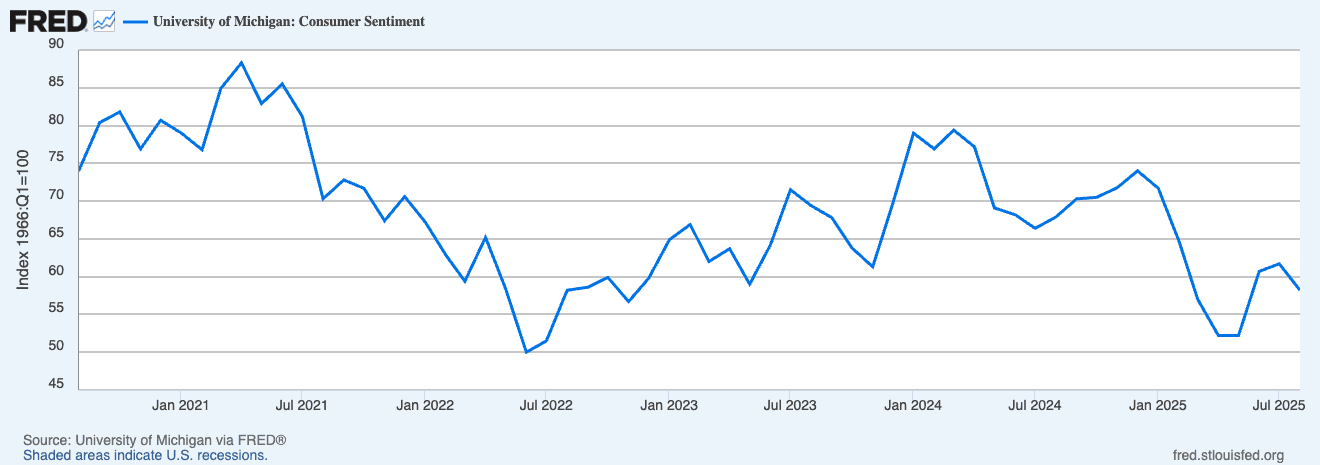
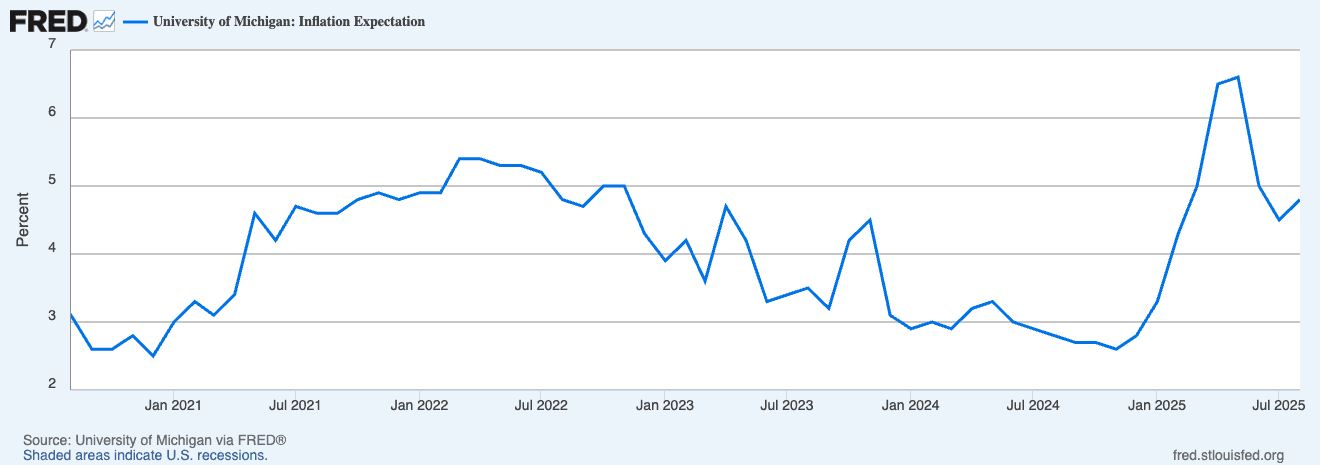
What’s especially striking is the split between how people feel about the economy and what they’re doing with their money. UoM Consumer sentiment data is weak, reaching levels which we saw in the 2022 economic downturn (as seen in the graphs). It shows that people are worried about jobs, inflation, and the cost of living. Yet retail investors are still putting money into the market, though not out of confidence in the future or the fundamentals of the company, if they even know about them. It’s more of an anxious participation, driven by FOMO or falling behind. This can unravel quickly if economic worries start to materialise. Many of these same investors might need to sell quickly, not because of a change in company fundamentals, but simply to cover living expenses. In other words, the market’s strength might be more fragile than it appears, propped up by participants who are ready to run at the first real sign of trouble.
So perhaps this bubble will not burst in the way we'd expect. The sentiment is different, yes, but the money is still very much in the market. Whether the trigger is AI failing to deliver on its promises, the economic drag from tariffs, or a slide into stagflation, we don't yet know. AI might be the vehicle carrying this bubble forward, but it's unclear whether it will also be the pin that pops it.
What makes this moment particularly strange is the disconnect between what's being said and what's actually being done. For all the bubble warnings in public, we don't really know what the big institutions are doing behind closed doors. What we do know is this: there's far more bearishness this early in the cycle than we've seen in recent bubbles. Some argue that means we need to see much more exuberance, more reckless euphoria, before things can truly fall apart. So the crash might come not because we didn't see it coming, but rather because by now it has become a self-fulfilling prophecy.
For true market exuberance to emerge, I believe we still need to see AI companies with questionable business models go public and triple in value within months. We haven’t seen this yet, with most IPO’s reverting to their issuing price after positive day-1 reactions. Proposed regulatory changes, loosening quarterly reporting requirements and relaxing the pattern-day-trading rule that limits retail margin speculation, could catalyse this behaviour. As these conditions align, the current bearish narrative would likely shift, with bubble warnings fading from mainstream discourse. Ironically, the moment the bears finally capitulate may signal the exact level of euphoria needed for the fire to fully ignite.
Florian Link
FOOTNOTE
Sources: FT, FRED, Goldman Sachs, WSJ, Own Research